World Games
Every summer camp has one event that crosses the line from “organized activity” into full psychological breakdown disguised as team bonding.
At our camp, that event was World Games Weekend.
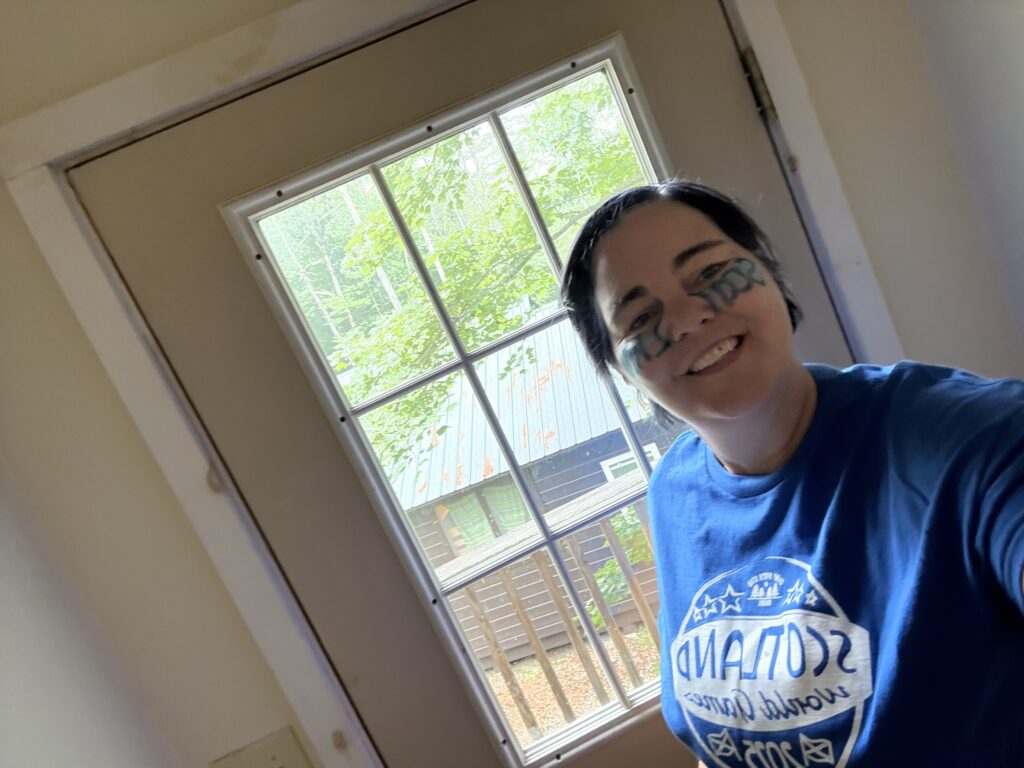
For one wildly competitive, medically-questionable, smoke-scented, sleep-deprived weekend, the entire camp divided into two countries complete with flags, chants, war paint, dramatic national pride, and the emotional regulation skills of caffeinated medieval armies
And this particular summer introduced one catastrophic detail:
The two camp nurses were placed on opposite teams.
Me versus my infirmary partner.
An absolutely terrible decision made by people who clearly did not understand the competitive potential of two medically trained adults running on caffeine and unresolved sibling-energy rivalry.
By Friday morning, the campers had fully committed to “Northern Caledonia” or “East Albion”. Counselors were painting their faces, composing chants, and speaking about “victory” with alarming sincerity.
One counselor spent six straight hours building a ceremonial entrance shield out of cardboard and pool noodles. Another painted his entire chest blue and referred to himself exclusively as “The Minister of Aquatics.” One arts-and-crafts counselor started speaking in a fake accent for so long she accidentally carried it into staff meeting.
Meanwhile, the nursing staff had quietly become enemies of the state.
Now technically, camp nurses are supposed to remain neutral during World Games.
Technically.
But once my partner walked into opening ceremonies wearing team colors and carrying a handmade flag like she was entering the Olympics, neutrality died immediately.
“Oh,” I thought. “So we’re doing this.”
From that moment forward, the infirmary became less of a healthcare facility and more of a demilitarized medical zone between two unstable governments.
Campers noticed instantly.
“Nurse Michelle, are y’all REALLY on different teams?”
“Yes.”
“Does that mean you hate each other now?”
“Only recreationally.”
The children loved this development far more than they should have.
Suddenly every camper entering the infirmary arrived with battlefield intelligence.
“Your partner’s team is practicing relay races.”
“She said your country can’t build fires.”
“They’re hiding their strongest canoe team.”
Thank you, tiny spies. Your contributions to international tension are appreciated.
The rivalry escalated quickly.
World Games Weekend starts innocently enough.
Opening ceremonies.
Songs.
Flags.
Inspirational speeches about teamwork and courage.
Then somebody blows an air horn and suddenly sixteen twelve-year-olds are screaming war chants while sprinting toward relay races like tiny Olympic gladiators.
This is when the infirmary shifts from “summer camp health center” to “rural emergency management unit.”
During the rope-burning challenge—the event where teams attempt to burn through a suspended rope with the hottest, largest flame possible—my partner and I found ourselves standing on opposite sides of a fire pit making direct eye contact like Cold War negotiators.

Children were screaming.
Counselors were throwing pine needles into flames like ritual offerings.
Someone blew an air horn for reasons still unknown.
And there stood the two camp nurses:
- one holding aloe vera
- one holding burn cream
- both fully prepared to emotionally destroy the other over fictional national honor
At one point my partner yelled across the field:
“Your flame structure has poor airflow!”
Which honestly hurt more than it should have. Because she was correct. Unfortunately. The campers treated our rivalry like premium entertainment. Every competition became a chance to report scores directly to whichever nurse they supported.
“Nurse Michelle! We beat your team in canoe relay!”
“That’s okay. Character is built through adversity.”
Five minutes later:
“Your partner says losers talk about character.”
Unprofessional behavior from medical staff, honestly. The counselors made it worse. They started referring to us like rival sports coaches.
“Nurse Michelle’s team has stronger hydration strategy.”
“Yeah, but your partner’s squad has emotional resilience.”
One counselor actually created a betting chart predicting which nurse would emotionally crack first during tug-of-war.
For the record:
it was my partner.
Not publicly.
But I saw it in her eyes when her team lost synchronized sponge transfer.
The sports competitions became deeply personal. Every dodgeball hit felt symbolic. Every relay victory became medical propaganda. I watched my partner sprint beside her team during a relay race screaming:
“HYDRATE AND DOMINATE!”
Which is objectively a fantastic slogan. I was furious I hadn’t thought of it first. The campers weaponized our competition constantly. One child walked into the infirmary dramatically whispering:
“Your partner says her team’s nurse gives better ice packs.”
“Oh really?” I replied calmly. “Interesting.”
I then handed him the coldest ice pack this camp has ever seen.
Healthcare excellence through spite.
The hardest part was trying to maintain professional cooperation while actively competing against each other. Because no matter how intense World Games became, campers still kept getting injured in increasingly ridiculous ways.
So there we’d be:
arguing over capture-the-flag scoring one moment…
…and treating a tetherball injury together the next.
Nothing says teamwork like jointly assessing a child who somehow got a splinter during interpretive dance. By Saturday afternoon, the rivalry had infected the infirmary itself. Our sides of the office slowly divided. Her clipboard had team stickers. My medication cart somehow acquired a tiny paper flag. Campers entering the infirmary immediately clocked the tension.
“This feels awkward,” one whispered.
“It should,” I told him while labeling ibuprofen cups.
The performance arts competition nearly ended our friendship entirely. Each fake country had to perform songs, skits, dances, and theatrical productions for points. My partner’s team performed an aggressively emotional dramatic retelling of their rope-burning victory complete with slow-motion choreography and fake smoke effects. It was infuriatingly good. Meanwhile my team performed a medically inaccurate but spiritually powerful dance about resilience and canoe warfare.
The judges loved it. My partner claimed corruption. Honestly? Fair. Then came the final relay event. The deciding competition. The entire camp gathered around the field screaming chants while counselors looked moments away from collapsing into the grass. My partner stood across from me holding a megaphone like a tiny exhausted dictator.
I stood clutching electrolyte packets and national pride.
The relay itself was chaos:
running,
canoes,
water buckets,
pool noodles,
children falling theatrically into grass,
someone losing a shoe,
a counselor pulling a hamstring while yelling “FOR GLORY.”
Classic camp atmosphere.
And somehow, against all odds, my team won.
Barely.
By a margin so small it immediately triggered three separate scoring disputes and at least one diplomatic crisis involving sponge regulations. My partner stared at the scoreboard in silence. Then she walked over, handed me a juice box, and said:
“This isn’t over.”
Which is exactly the kind of emotionally charged statement you want from someone who also controls access to Tylenol. But the funniest part of World Games Weekend wasn’t the competition. It was how quickly the campers started viewing us like opposing team mascots instead of licensed medical professionals. Children would enter the infirmary and visibly hesitate before choosing which nurse to approach based on political allegiance.
One camper whispered:
“I don’t want to betray my country.”
Buddy. You need sunscreen. This is not espionage.
And despite all the rivalry, all the trash talk, all the passive-aggressive comments about hydration strategy, my partner and I still ended up doing what camp nurses always do:
keeping everyone together.
We treated the burns.
The bruises.
The homesickness.
The exhaustion.
The mysterious rash that may or may not have been caused by rolling dramatically in grass for “team spirit.”
We reminded counselors to drink water. We convinced campers they were not dying from mosquito bites. We cleaned up scraped knees while wearing opposing team colors and pretending not to enjoy the ridiculousness of all of it. Because underneath the fake countries and competitive chaos, World Games was always about something bigger.
Kids finding confidence. Counselors becoming leaders. Campers discovering they could be brave, loud, ridiculous, creative, emotional, and fully themselves all at once. And honestly, having the two camp nurses on opposing teams only made it better.
Mostly because nothing unites children faster than watching two exhausted healthcare professionals engage in a completely unnecessary rivalry over fictional international dominance.
Would we do it again?
Absolutely.
Would we pretend to be mature and professional beforehand?
Of course.
Would we immediately become enemies the second opening ceremonies began?
Without question.