Notes from the Camp Infirmary: A Summer in Bug Spray, Band-Aids, and Barely Controlled Chaos
There are two kinds of people at summer camp. The first kind imagines camp as a wholesome wilderness retreat full of canoe rides, wilderness hikes, friendship bracelets, and children singing folk songs around a crackling fire.
The second kind has worked in the camp infirmary.
I am the second kind.
Before becoming a camp nurse, I pictured myself spending peaceful mornings under pine trees with a hot tea in hand while helping the occasional homesick camper through a scraped knee or mild sunburn. I imagined fresh mountain air, organized medication carts, and children who said things like, “Excuse me, Nurse Michelle, I seem to have a tiny splinter.”
What I got instead was ten straight weeks of absolute medical improv theater.
Camp nursing is not really nursing in the traditional sense. It is part emergency medicine, part detective work, part wildlife management, and part hostage negotiation with twelve-year-olds who refuse to drink water unless it comes in a neon bottle with stickers on it.
Within forty-eight hours of arriving at camp, I learned several important things:
- Children can get injured standing perfectly still.
- Teenage boys believe dehydration is a personality trait.
- Every rash becomes “probably flesh-eating bacteria” after 10 PM.
- Counselors are often more medically concerning than the campers.
The infirmary itself looked charming at first. Rustic cabin. Red and beige curtains like leftovers from someones summer cottage. Large front porch. Birds chirping in the trees.
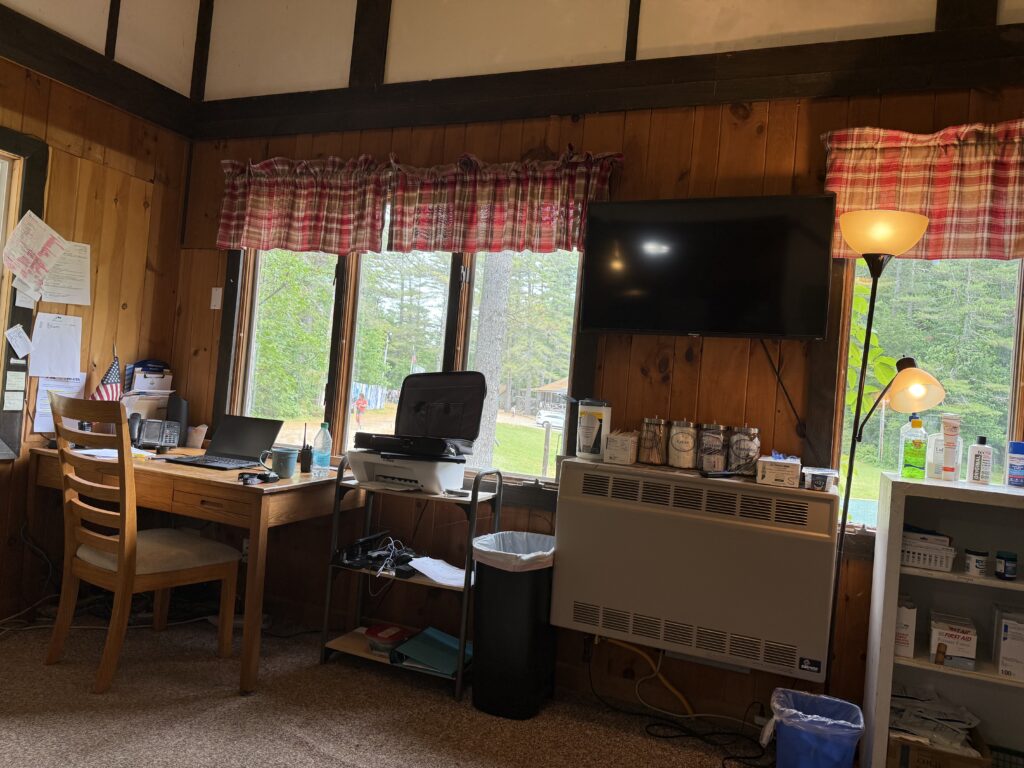
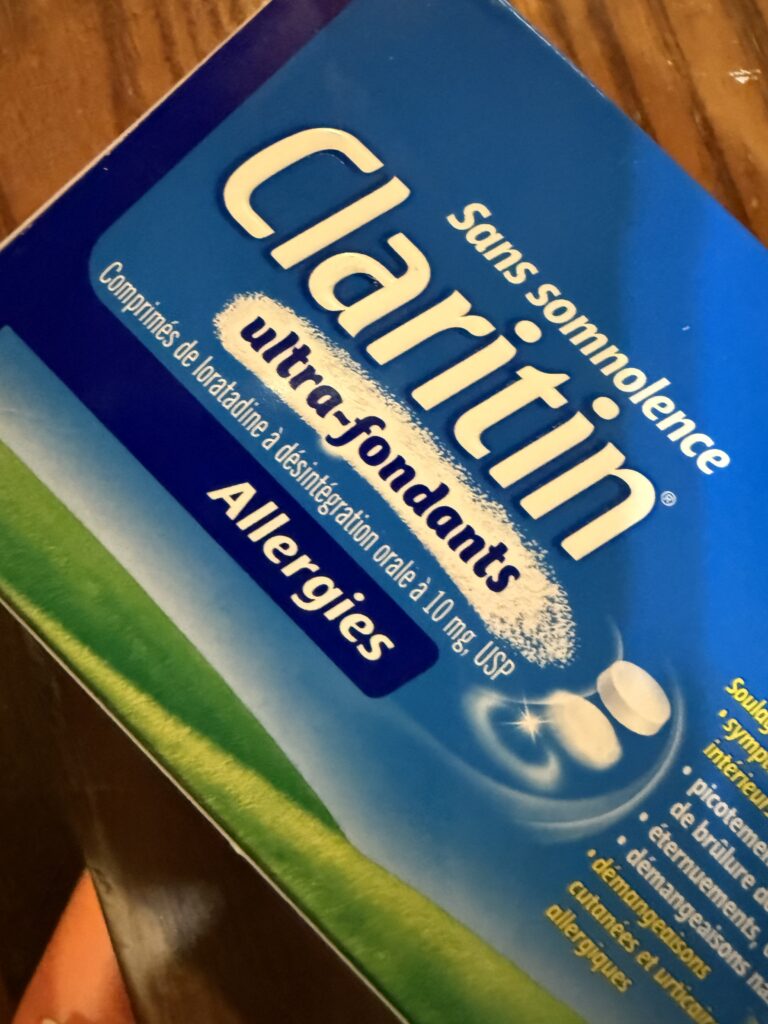
Then the campers arrived. With their belongings packed in shiny duffel bags and medicines brought from home. In languages other than English [it’s cool. That’s what google translate and a lifetime spent traveling is good for].
The first camper burst through the door before breakfast on Day One clutching his arm dramatically.
“I think it’s broken.”
“What happened?”
“I fell.”
“From where?”
“A hammock.”
Now. I’m not an orthopedic specialist, but I felt confident saying that if you can sprint full speed to the infirmary while screaming about your “broken arm,” there’s a decent chance you’re going to survive.
Diagnosis: emotional damage. One Band-Aid. Full recovery.
That set the tone for the summer.
Campers come to the infirmary for reasons that would never occur in the real world.
“I swallowed lake water.”
“Okay?”
“A lot of it.”
“How much?”
“…like emotionally or physically?”
One child came in sobbing because he had “lost circulation” in his fingers.
He was wearing five rubber bracelets so tight his hand looked like a Thanksgiving turkey wrapped with kitchen twine.
Another camper arrived whispering dramatically:
“There’s something wrong with my eye.”
“What’s happening?”
“It hurts when I blink.”
After extensive evaluation, I removed a Dorito crumb from under his eyelid.
A Dorito.
Nacho Cheese, if we’re being medically specific.
And then there were the mystery illnesses.
Summer camp creates a strange psychological phenomenon where children suddenly become deeply aware of bodily sensations they have ignored their entire lives.
“Does your stomach hurt?”
“Yes.”
“When did it start?”
“After fifth dessert.”
Interesting.
One camper insisted she had a “rare tropical disease” because she had mosquito bites on both ankles.
Honey, you are not battling jungle fever. You walked through MAINE. F’N MAINE in shorts. I assure you, there are no tropical diseases in Maine.
The homesickness cases were usually my favorite, though. Not because they were easy, but because they were the most honest.
At night, after the campfire ended and the cabins got quiet, the bravest little campers would suddenly crumble like stale granola bars.
“I miss my mom.”
“I know.”
“I think she misses me too.”
“I’m absolutely sure she does.”
Sometimes all they needed was a flashlight, a cold washcloth, and someone to tell them they could make it until morning.
Other times they needed to dramatically sob while clutching a stuffed animal named “Mr. Pickles.” Camp medicine is holistic.
And then there were the counselors.
Dear Lord, the counselors.
People think camp counselors are energetic role models who lead nature hikes and inspire young minds.
What they actually are is sleep-deprived raccoons wearing friendship bracelets.
Counselors never come into the infirmary calmly.
They burst through the door carrying three water bottles, two walkie-talkies, and seventeen layers of panic.
“We have an emergency.”
“What happened?”
“Tyler got stung by something.”
“Is he breathing?”
“Yes.”
“Can he talk?”
“Yes.”
“Okay. Where is Tyler?”
“He stayed at archery.”
Meanwhile Tyler eventually strolls in twenty minutes later eating a popsicle with one mosquito bite on his elbow.
The counselors themselves were somehow worse patients than the children.
One counselor ignored a sprained ankle for four days because she “didn’t want to inconvenience anyone,” then finally showed up walking like a wounded pirate.
Another tried to convince me he didn’t have heat exhaustion while actively lying on the infirmary floor whispering, “I can taste colors.”
Sir. You are becoming one with the atmosphere.
Please drink this electrolyte packet immediately.
A yet a third dared to coming knocking at 3a because he was convinced he had pink eye. My dude, is it a medical emergency? Are you going to be rubbing your eyes on anyone else while you sleep? No? the I say this with the least amount of concern I can muster ” Then go back to sleep and address it in the morning!”
Camp nurses also become accidental therapists.
Children will tell you absolutely anything once you hand them an ice pack.
I learned who had secret crushes [campers on each other, campers on counselors, counselors on other counselors], who cheated at Gaga Ball, who stole pudding cups from the dining hall, and which cabin had been hiding contraband Sour Patch Kids under a bunk.
One child looked me dead in the eye during med pass and whispered:
“I think my counselor is in love.”
“How do you know?”
“She started wearing mascara to breakfast.”
Honestly? Strong evidence.
The dining hall alone deserves its own medical journal.
Every camp meal feels like a social experiment sponsored by chaos.
Children consume food combinations that would get an adult investigated by authorities.
Pancakes dipped in ketchup.
Mac and cheese with chocolate milk.
Watermelon wrapped in turkey slices.
And somehow every meal ends with someone yelling:
“NURSE!”
You sprint across the dining hall expecting anaphylaxis only to discover a camper has “choked” because he swallowed a noodle too aggressively.
Then there’s hydration.
Camp nurses spend roughly 70% of the summer saying the phrase:
“Drink water.”
Not juice.
Not soda.
Not “the blue sports drink because it tastes stronger.”
Water.
Children at camp move around like tiny caffeinated lizards. They run everywhere. They scream constantly. They spend six hours baking in the sun and then act shocked when they develop headaches.
“How much water did you drink today?”
“…does popsicle count?”
No. Popsicle never counts.
Although I did once have a camper proudly announce:
“I peed clear!”
Which, honestly, is the closest thing camp nursing has to winning an Olympic medal.
The bug bites deserve honorable mention too.
Campers react to mosquito bites with either complete indifference or Oscar-worthy tragedy. There is no middle ground.
One camper stared solemnly at a single bite on his shin and asked:
“Do you think this will change my personality?”
I told him yes. He was now outdoorsy.
Ticks, however, turn everyone into Victorian widows.
I removed one tiny tick from a camper’s sock line and suddenly twelve nearby children were planning their funerals.
“Can ticks smell fear?”
“Yes,” I said. “That’s how they choose.”
The screaming that followed echoed through the forest. You haven’t truly lived until you’ve watched thirty campers simultaneously check their armpits in terror.
Then there are the legendary camp injuries. Not serious injuries. Just deeply ridiculous ones. A camper once ran into the infirmary crying because another child had “weaponized a pool noodle.” I treated a bloody nose caused by competitive tetherball. One child somehow got a splinter in his butt cheek. I did not ask follow-up questions because I wanted to keep what remained of my sanity. And camp germs spread with terrifying speed.
The second one camper says, “My throat feels weird,” every child within a three-cabin radius suddenly develops symptoms.
“I think I have what Emma has.”
“What symptoms do you have?”
“She said her throat hurt.”
“Does your throat hurt?”
“…not yet.”
The camp nurse’s greatest enemy is not illness.
It is dramatic anticipation of illness.
Children monitor each other like tiny unlicensed physicians.
“His cough sounds wet.”
“She looked pale at canoeing.”
“He sneezed twice during arts and crafts.”
Thank you, Doctor Tiny Human. I’ll alert the CDC immediately.
But despite the chaos, camp has a weird magic to it.
You start noticing the same campers returning every day for absolutely no medical reason at all.
One wants an extra Band-Aid because he likes the dinosaur print. One just wants to sit in the air conditioning for five minutes. One always wanders in after lunch to tell you updates about cabin drama. The infirmary quietly becomes a safe place. A reset button. Camp is loud all the time. Loud in the dining hall. Loud at the lake. Loud during color wars. Loud during songs that should honestly qualify as psychological warfare after the fifteenth repetition.
The infirmary is one of the few places where campers get to pause. Sometimes they sit on the couch winging their legs and talking about home. Sometimes they admit they’re nervous about making friends. Sometimes they just need an adult who isn’t trying to make them climb a rock wall before breakfast.
And honestly? Those moments become the best part.
Not the medication counts. Not the paperwork. Not explaining for the seventeenth time that sunscreen is not optional. It’s the weird little human moments. The camper who proudly tells you she finally showered without crying because the bathhouse spiders “seem chill now.” The homesick kid who survives the whole week and leaves camp grinning with twelve friendship bracelets up his arm.
The counselor who collapses into a chair after bedtime whispering, “I think today aged me biologically.”
Camp nurses witness all of it. The meltdowns. The bravery. The mosquito bites shaped suspiciously like Florida. The first crushes. The last-day tears. The deeply questionable camp talent show acts.nAnd somewhere in the middle of all the chaos, you start becoming part of camp folklore yourself.
By Week Four, campers stop calling you “the nurse” and start referring to you like a mythical woodland creature.
“She knows where the good Band-Aids are.”
“She has popsicles.”
“She can tell if you’re faking.”
All true.
Especially the last one.
Camp nurses develop supernatural instincts.
I can identify fake nausea from thirty feet away. I know the exact facial expression of a camper trying to escape canoeing. I can tell whether an injury happened accidentally or because someone ignored the phrase “don’t jump off that.” One camper walked in soaking wet and bleeding slightly from the forehead.
“What happened?”
“We were experimenting.”
Never, in the history of summer camp, has anything good followed that sentence.
Another camper proudly informed me:
“I didn’t cry when I fell.”
“That’s awesome.”
“But Jacob did.”
“Was Jacob hurt?”
“No. He just gets emotional.”
Honestly relatable.
By the end of the summer, the infirmary looked less like a medical facility and more like a battlefield triage station run by exhausted squirrels.
Half the pens disappeared. Nobody knew where the thermometer covers went. There was glitter in places glitter should never be. I found a friendship bracelet in the medication drawer and simply accepted it as part of the ecosystem. And yet, on the final day of camp, when the buses pull away and the cabins empty out, the silence feels strange.
No more running footsteps. No more dramatic declarations about bug bites. No more campers asking if dehydration can make your eyebrows tired. The campgrounds suddenly feel too still.
That’s the thing nobody tells you about camp nursing.
You arrive expecting chaos, and you absolutely get it. You get sunburns and homesickness and endless questions about whether lake water is technically soup.
But you also get front-row seats to kids becoming braver versions of themselves.
You watch shy campers become leaders.
You watch homesick children learn resilience.
You watch counselors somehow survive on caffeine, adrenaline, and the power of collective delusion.
And somewhere along the way, the infirmary stops being just a place for scraped knees any mysterious rashes.

It becomes part confessional booth, part comedy club, part emergency cooling station, and part home.
Would I do it again?
Ask me during Week Seven when I’m peeling stickers off a child’s mysterious rash while someone outside screams because a frog entered the bathroom.
I’ll say absolutely not.
Ask me in January when the world feels gray and cold and quiet.
I’ll probably miss all of it.
Even the Dorito eye injury.